Every Spanish food business owner faces this critical decision—fresh or packaged pork? The choice impacts your costs, quality, food safety, and customer satisfaction. With Spain’s pork consumption reaching 816,500 tonnes in 2024 (up 2.84%), getting this decision right matters more than ever.
FACCSA has been a trusted name in Spanish pork processing for over 80 years. Founded in 1941, we now process 25,000 pigs weekly, delivering quality fresh and packaged pork products across Spain and 52 countries worldwide . Our industrial-scale cutting and packaging plant ensures consistent quality for bars, restaurants, hotels, and supermarkets.
This guide compares both options with Spain-specific market insights. You’ll learn which choice fits your business model best.
Understanding Fresh Pork vs. Packaged Pork: Key Definitions
What Is Fresh Pork for Commercial Use in Spain?
Fresh (chilled) pork comes from recently slaughtered animals with minimal processing. Butchers cut it to order, usually within hours or days of slaughter.
Fresh pork typically lasts 3–5 days under proper refrigeration. You’ll see it in traditional Spanish butcher shops and high-turnover restaurants.
This option works best for daily menu items and businesses with high pork turnover. Many traditional Spanish bars prefer fresh pork for dishes like secreto ibérico and costillas.
What Is Packaged Pork in Spanish B2B Context?
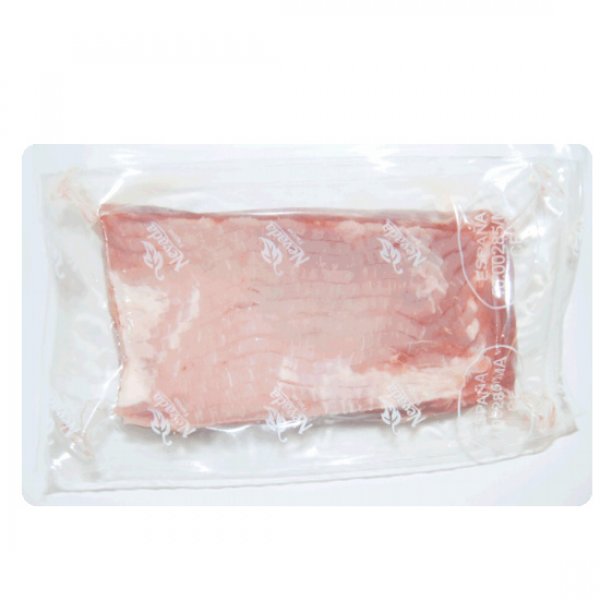
Packaged pork gets pre-cut and vacuum-sealed or MAP (Modified Atmosphere Packaging) at industrial plants like FACCSA. The sealing happens immediately after cutting to lock in freshness.
Unopened vacuum-packed pork lasts 2–4 weeks in commercial refrigeration. This includes primal cuts, portion-controlled packs, and value-added products.
Spain’s processed pork market maintains 75% penetration with 6.2% volume growth in 2024, showing strong demand. Packaged pork serves chain restaurants, catering companies, and supermarkets well.
Side-by-Side Comparison: Fresh vs. Packaged Pork for Spanish Businesses
1. Cost Efficiency & Bulk Pricing
| Factor | Fresh Pork | Packaged Pork |
| Per-kilo cost | Higher (custom cutting) | Lower (standardized batches) |
| Waste factor | Higher (15% trimming losses) | Lower (3% pre-trimmed, consistent yield) |
| Bulk discounts | Limited | Significant for large orders |
| Best for | Small bars, local butchers | Chains, hotels, large caterers |
Packaged pork typically costs less per kilo because factories process large batches efficiently. You also waste less since the meat arrives pre-trimmed and portioned.
Spanish restaurants spending on pork saw spending increase 5.6% to €7.7 billion in 2024, making cost efficiency critical.
2. Shelf Life & Inventory Management
Fresh pork requires daily or every-other-day deliveries. You must use it within 3–5 days or risk spoilage. This creates pressure on inventory management and increases waste risk.
Packaged pork gives you 2–4 weeks of shelf life unopened. You can order in bulk, reduce delivery frequency to weekly or bi-weekly, and lower waste significantly.
The HoReCa sector (hotels, restaurants, cafes) accounts for 20% of fresh meat consumption in Spain, making shelf life a key decision factor. FACCSA’s cool store infrastructure ensures optimal temperature control throughout Spain .
3. Quality, Freshness & Sensory Characteristics
Traditional Spanish consumers perceive fresh pork as higher quality. Many older customers (over 50, representing 70% of consumption) prefer seeing meat at the butcher counter.
However, vacuum-packed pork maintains quality remarkably well. Scientific studies show vacuum-packed pork chops display less discoloration and better appearance scores than paper-wrapped fresh cuts.
Fresh pork penetration increased from 56.7% to 57.4% in Spain, showing steady demand. Both options deliver excellent quality when handled properly.
4. Food Safety & Compliance
Fresh pork carries higher bacterial growth risk, especially in warm temperatures. You must maintain strict cold chain management from delivery to service.
Packaged pork’s sealed environment limits contamination significantly. Each package includes traceable batch numbers and “Best Before” dates for HACCP compliance.
EU food safety standards require strict traceability for commercial pork. Packaged pork makes compliance easier with documented batch tracking.
5. Convenience & Operational Efficiency
| Aspect | Fresh Pork | Packaged Pork |
| Prep time | Requires cutting/trimming (2+ hours/day) | Ready-to-cook, portion-controlled |
| Labor cost | Higher (skilled butcher needed) | Lower (minimal prep, unskilled staff OK) |
| Delivery frequency | Daily or every 2 days | Weekly or bi-weekly |
| Staff training | Requires butchery skills | Minimal training needed |
Packaged pork saves labor costs significantly. Your kitchen staff can open packages and start cooking immediately, without skilled butchers on payroll.
For catering companies and chain restaurants, packaged pork ensures consistent portion sizes across all locations.
When to Choose Fresh Pork for Your Spanish Business
Ideal Business Types for Fresh Pork in Spain
Traditional Spanish bars and cafes should choose fresh pork. This channel represents the main outlet for fresh pork outside the home in Spain.
High-end steakhouses emphasizing “frescura diaria” (daily freshness) on their menus benefit from fresh pork. Customers paying premium prices expect to see fresh meat.
Local butcher shops with same-day sales models naturally require fresh pork. Their entire business model depends on daily fresh cuts.
Businesses serving traditional dishes like secreto ibérico, lomo, and costillas often prefer fresh pork for authenticity.
Pros & Cons Summary for Fresh Pork
✅ Pros:
- Perceived as premium freshness by Spanish customers
- Custom cuts for specific dishes
- Traditional for authentic Spanish cuisine
- Appeals to over-50 demographic (70% of market)
❌ Cons:
- Short 3–5 day shelf life creates waste risk
- Higher labor costs for skilled butchers
- Requires daily deliveries and tight inventory
- Trimming losses average 15%
When to Choose Packaged Pork for Your Spanish Business
Ideal Business Types for Packaged Pork in Spain
Chain restaurants need consistency across multiple locations. Packaged pork delivers identical portion sizes and quality at every branch.
Catering companies handle bulk orders with advance prep. Packaged pork’s extended shelf life lets them order large quantities without worry.
Hotels and institutional food service require predictable inventory management. The HoReCa sector represents 20% of Spain’s fresh meat consumption.
Retail supermarkets need extended display life for their meat counters. Processed pork holds 48% of Spain’s meat market.
Organized catering services benefit from portion-controlled packaging that reduces waste and labor costs.
Pros & Cons Summary for Packaged Pork
✅ Pros:
- Extended 2–4 week shelf life reduces waste dramatically
- Cost-effective with 10% lower per-kilo pricing
- Consistent quality across all orders
- Lower labor costs (minimal prep required)
- HACCP compliance easier with batch tracking
❌ Cons:
- Less customization for special cuts
- Packaging costs add to total price
- Some traditional customers prefer butcher appearance
FACCSA’s industrial-scale packaging ensures consistent quality across 100 million kg annual output, serving 52 countries beyond Spain .
Spain-Specific Market Opportunities: Pork Procurement in Spanish HoReCa
Spanish HoReCa Market Dynamics
Pork accounts for 20% of fresh meat consumption in Spain’s HoReCa sector (hotels, restaurants, cafes). Out-of-home consumption represents 16% of total pork consumption nationwide.
Popular pork dishes in Spain include sandwiches, burgers, secreto steak, tenderloin, and ribs, representing one-third of all consumption.
Regional differences matter: Andalusia leads in pork consumption, while the Central Iberian Plateau shows the highest growth rates.
Target demographics: The over-50 age group accounts for 70% of pork consumption in Spain. However, out-of-home consumption remains low among under-35 audiences, creating growth opportunities.
Regional SEO Strategy for Spanish Businesses
Target your procurement conversations by region:
- Andalusia: “proveedor de cerdo Andalucía hostelería” (largest market)
- Central Iberian Plateau: “cerdo fresco al por mayor Meseta Central” (fastest growth)
- Nationwide: “suministro nacional de cerdo España servicios de alimentación”
Nationwide Distribution Advantages in Spain
Partner with processors capable of nationwide Spanish cold-chain delivery. FACCSA’s scale enables reliable supply across all Spanish regions .
FACCSA processes 25,000 pigs weekly, ensuring supply stability for large Spanish chains and distributors . Our export experience to 52 countries demonstrates international compliance standards .
How to Calculate Total Cost of Ownership (TCO) for Pork Procurement in Spain
Use this simple formula for your Spanish business:
TCO=Price per kg+Waste Cost+Labor Cost+Storage Cost−Bulk Discounts
TCO=Price per kg+Waste Cost+Labor Cost+Storage Cost−Bulk Discounts
Example Calculation for Spanish Restaurants
Fresh pork scenario:
- Purchase price: €10/kg
- Waste (15%): €1.50/kg
- Labor (2 hours butcher/day): €2.00/kg
- Total: €13.50/kg
Packaged pork scenario:
- Purchase price: €9/kg (10% lower)
- Waste (3%): €0.27/kg
- Labor (0.5 hours prep/day): €0.50/kg
- Bulk discount: -€0.30/kg
- Total: €9.47/kg
Packaged pork saves €4.03 per kg in this example. For a restaurant using 100 kg weekly, that’s €403 savings per week or €20,956 annually.
Spanish pork spending increased 5.6% to €7.7 billion in 2024, making efficiency critical for profitability.
FACCSA: Your Trusted Spanish Pork Processing Partner
Why FACCSA Stands Out in Spain
80+ years of expertise defines FACCSA. We started as a cooked ham factory in 1941 and grew into Spain’s leading cutting and packaging plant .
Industrial-scale capacity: We process 25,000 pigs weekly, equaling 100 million kg annually . This scale guarantees supply stability for large orders.
Full-service operations: Our facility combines cutting, packaging plant, and cool store under one roof in Spain . This integration ensures quality control at every step.
Extensive product range: We offer a complete catalogue of fresh and packaged pork products for Spanish bars, restaurants, hotels, and supermarkets .
Quality assurance: Our vacuum-sealing technology extends shelf life while maintaining EU food safety compliance.
Global reach: FACCSA serves 52 countries beyond Spain, proving our international quality standards.
FACCSA’s B2B Advantage for Spanish HoReCa Market
Our 25,000 pigs weekly capacity ensures reliable supply for Spanish chains and distributors . You won’t face stockouts during peak seasons.
FACCSA’s cool store infrastructure maintains optimal temperature control throughout Spain’s climate variations. This protects your investment from Madrid to Seville.
We meet EU food safety requirements with traceable batch numbers for HACCP compliance. Spanish hotels and restaurants need this documentation for audits.
Our experience serving Spanish bars, cafes, restaurants, hotels, and supermarkets spans eight decades. We understand local market needs.
Contact FACCSA today for customized pork supply solutions tailored to your Spanish business.
Decision Framework: Which Option Fits Your Spanish Business?
Quick Decision Checklist
Choose Fresh Pork If:
- ✅ You operate daily menu turnover with same-day sales
- ✅ Custom cuts essential for traditional Spanish dishes (secreto, lomo, costillas)
- ✅ You have skilled butchers on staff
- ✅ “Frescura diaria” serves as your key marketing claim
- ✅ You run a traditional Spanish bar or cafe (main fresh pork channel)
Choose Packaged Pork If:
- ✅ Multiple locations need consistency (chain restaurants)
- ✅ You want to reduce waste and labor costs
- ✅ Bulk purchasing saves money (100M kg annual capacity available)
- ✅ Extended shelf life critical for your inventory management
- ✅ You operate organized catering or hotel food service
Conclusion & Next Steps
Both fresh and packaged pork have clear merits. Your choice depends on your business model, volume, and operational needs.
Key insight for Spain: Many successful Spanish businesses use a hybrid approach. They use fresh pork for signature traditional dishes and packaged pork for high-volume menu items.
Spain’s pork market grew 2.84% in 2024 to reach 816,500 tonnes, showing strong demand. The HoReCa sector represents 20% of fresh meat consumption, with significant growth opportunities.
Partner with FACCSA for flexible fresh and packaged pork solutions. We bring 80+ years of Spanish expertise and 25,000 pigs/week capacity to serve your business .
Ready to optimize your pork procurement? Contact FACCSA today for a customized consultation for your Spanish business. Our team will help you calculate your exact TCO and recommend the best solution for your operation.